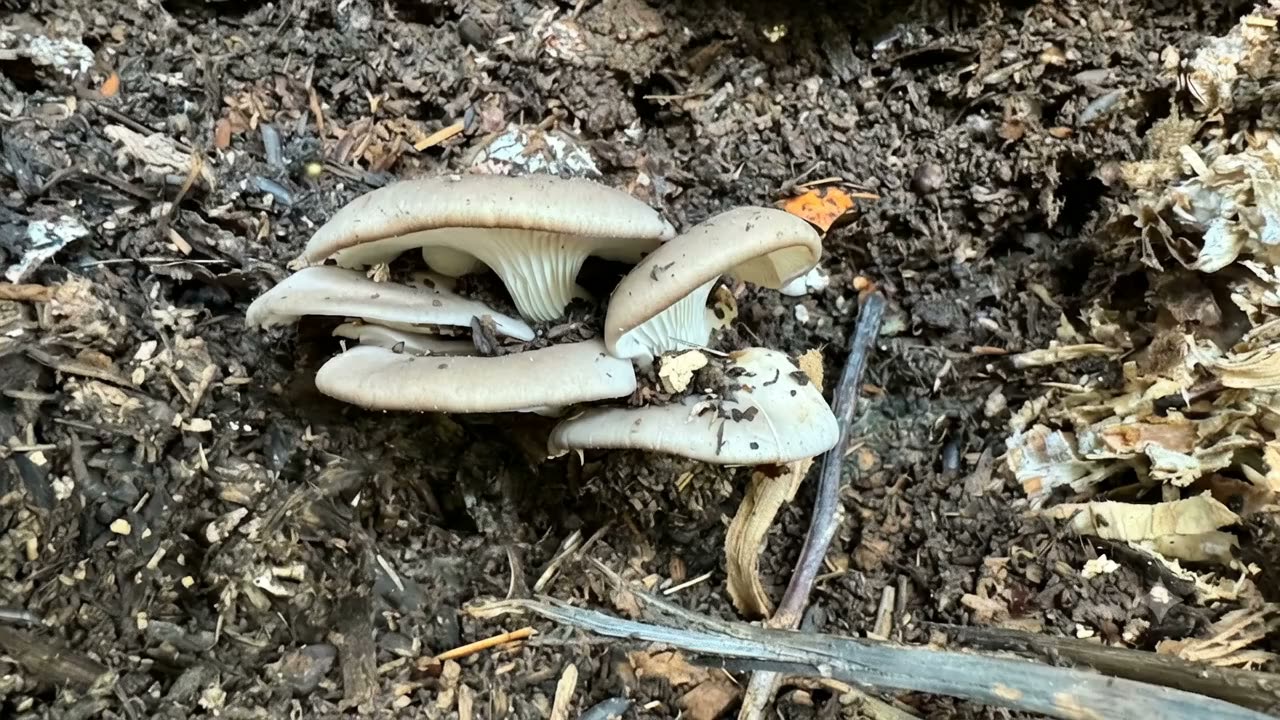
Honoring God’s good created order
The Earth is the Lord’s and all that it contains. Our calling from God is to honor the Creator and recognize the dignity and goodness of the created world. To nurture and care for that diversity and to image God’s character towards all other beings: both humans and creatures. God delights in the diversity of Creation.
Writers like Wendell Berry and Joel Salatin emphasize the creatureliness of Creation: God has given each created thing a distinctive character or personality. As we interact with created beings we should seek to honor God by having an attitude of care and respect for the distinctive personality of each creature. When Joel Salatin refers to this concept he talks about the ‘pigness of the pig’. There is something unique about the personality of how God created a pig to act and behave and we should seek to be able to manage livestock in such a way that this distinction can be expressed. Livestock should not be treated like machines — to be used for our maximum profit and extraction; instead they should be treated at the least like animals, part of God’s good creation project.
The earth is not disposable. There is a sense of worldliness that is passing away; the systems, powers, and principalities of fallen mankind. Things like violence, greed, oppression, wasting and exploiting resources and creation. These are a form of worldliness that we should avoid and not participate in. Contrasted to this the ‘world or cosmos’ of God is something to conserve, cherish, nurture and protect.
Sabbath and the manna economy
In the Genesis Creation narrative we can observe how God integrated a rhythm of working and resting. On the seventh day God rested. This is a Sabbath principle. In the same way land should rest occasionally. Or add cover crop instead of production crop as part of the rotation. This is an important principle. We aren’t here to maximize efficiency and extraction.
Even in the Exodus narratives we can observe conservation principles in the ‘manna economy’ of the wilderness. The Israelites learned to take only what they needed, and no more; to rely on God’s abundance and provision. In the Manna/Sabbath economy manna is a gift and a test. To see if the Israelites can re-train their minds to rely on the abundant provision of God instead of hoarding resources by exploitation, oppression, and injustice.
Sacred work
God gave Adam (humanity) the responsibility to steward and take care of creation. Sacred work principle. ‘By the sweat of your brow’; knowing that our work is directed by God and that we have a tremendous responsibility for the physical health and well-being of the humans and animals that consume the foods we produce. This is why it’s critical that we’re producing nutrient dense food that is not toxic. Because this is literally what gives us energy to live a meaningful life. To heal the sick. To create economies that are sustainable and in turn political stability for the nations. All these realms are related to soil health principles because of the complex networks of how God created the world.
Adam and Eve’s imperative was to be fruitful and multiply. ‘Vermehret euch’. This is a principle and pattern in creation. Regenerate. Proliferate. Christ as the second Adam (redeemed humanity) has a more relevant calling than the first Adam. Practicing resurrection life. On the day of resurrection a new order is inaugurated. Christ is the Lord of God’s Kingdom that has already begun to be revealed in this world. God wants to use us as agents of his great resurrection project on this world, both in the present time and in the fulness of the coming kingdom.
Noah and biodiversity
God gave Noah the responsibility to preserve the biodiversity of species in the face of ecological disaster. In a similar way, each of us has the obligation and calling to preserve biodiversity of species in the face of ecological and climate uncertainty. After he accomplished his mission Noah became a man of the land: viticulture and starting fermenting and brewing.
The earth and all species are longing to be regenerated. Creation is groaning for the children of God to be revealed (Romans 8). Do not be conformed to this world but be transformed by a renewing of the mind (Romans 12). Be born again. Many of us have to totally change our paradigm of agriculture. Similar to the spiritual process of repentance, we have to change our mind, unlearn, and reconstruct our ways of thinking. Before a soil can be regenerated sometimes the land steward has to have a personal renewal.
On earth as it is in heaven
God’s will be done on earth as it is in heaven. God’s kingdom is to be established on this earth, in our hearts, families, communities and the land we steward. Restoring relationships is part of God’s restoration project. Let’s recognize each other as siblings in the family of God and communicate with each other in a Christlike way. We need to build these networks of friendships to borrow tools and resources from each other. Examples: forming cooperations between neighboring farms to share equipment and resources.
New creation
Since Christ has been revealed as the pattern and archetype of resurrection; all of us who have been born again and are in Christ are agents of God’s new Creation project of reversing the curse and fall of mankind and stepping forward into a new life with Christ. Now that we have been raised with Christ let us put on the mind of Christ and participate in the reconciliation of all things: the entire Cosmos.
When Mary saw the resurrected Christ she mistakenly thought he must be the gardener. Christ is a gardener and steward. As agents of resurrection, we are to participate in nurturing and stewarding microbial and plant life. Preserving native species as well as nurturing habitat and providing the environment for life to express itself. God has poured out his spirit on all flesh (including beasts and microbes). In the great commission Jesus said: preach the gospel to all creation. All things including natural creation are headed towards ultimate reconciliation. Acts 3:21 speaks about how in the fullness of time God will accomplish a restoration of all things.
Love your neighbor
If we love our neighbor we will seek to produce food that is nutritious and not toxic. If we want the best for our neighbor we will invest time, resources and energy into producing food in a way that is most beneficial for human health. Researchers are discovering that foods and animals that are grown in environments with diverse microbial and biological communities will likely be higher in nutrient compounds like ergothioneine, amino acids, proteins, and plant secondary metabolites that come from balanced agronomy and nutrition.
“Do unto those downstream as you would have those upstream from you do unto you.” — Wendell Berry
In watersheds especially, it is important to manage our land use in such a way that people living downstream from us are taken care of and not negatively impacted.
A warning
The Bible also has judgements and warnings for people who neglect creation care principles. Revelation 11 mentions the destruction of those who destroy the earth. This type of judgement may be an example of God simply allowing people to experience the negative consequences of their actions. If we ignore creation care principles, we may be faced with extinction of species and polluted environments. These are natural results of not being in right relationship with our environment. Let us avoid this type of judgement.
The broader scriptural pattern and witness is that our relationship with God involves relationships with communities of all species and creation. The archetypical example of this being the ancestors of humanity; Adam and Eve. When they were in right relationship to God, the world was a garden of harmony. When this relational harmony was broken it affected the behaviour and patterns of the natural world.
Seek first the Kingdom
Finally, the ultimate pursuit of our vocation as land stewards must be to seek God’s kingdom first. Our goal cannot be the relentless pursuit of capital, profit and yield at the expense of the things that God prioritizes. We have to find a way to navigate this tension in a way that is faithful to Christ’s teaching and example in the Sermon on the Mount: you cannot serve both God and Mammon, and seek first the Kingdom of God.
Conclusion
We have the tools, ability, and opportunity to make a positive beneficial impact; let’s go for it, help each other and figure this thing out.
Further reading
- God or Mammon? Hutterites and Creation Ethics – Coffee with Kierkegaard
- Christianity, Creation and Climate Change – Coffee with Kierkegaard